Protect Today, Secure Tomorrow: A Practical Guide to Insurance Protection for Australians in 2026
Life can change unexpectedly. Serious illness, injury or the death of a family member can have significant financial consequences for individuals and households.
Personal insurance is designed to provide financial protection when specified events occur, subject to the terms, conditions, definitions and exclusions of the relevant policy.
There are several types of personal insurance available in Australia, including Life Insurance, Total and Permanent Disability (TPD) Insurance, Income Protection and Trauma Insurance. The way these policies work — and the circumstances in which they may pay a benefit — can differ significantly between insurers and products.
This guide explains some of the key types of personal insurance, common policy features and factors to consider when reviewing existing cover.
This article provides general information only and does not take into account your personal objectives, financial situation or needs. It is not personal financial advice or a recommendation to acquire, cancel or replace any insurance product. Before making a decision, consider whether the information is appropriate for your circumstances and review the relevant Product Disclosure Statement (PDS) and, where applicable, Target Market Determination (TMD).
Why Insurance Protection Matters More in 2026
A few forces are shaping the conversation around personal insurance this year:
- Rising premiums, but a more stable outlook. Premiums can vary significantly depending on factors such as age, occupation, smoking status, health, cover amount, policy structure and insurer. Premiums may also change over time depending on the premium structure and policy terms.
- Policy definitions and exclusions remain important. Insurance policies can differ significantly in how they define disability, income replacement, medical conditions, exclusions and eligibility for benefits. These differences can affect whether a claim meets the policy terms, so it is important to read the relevant PDS and understand the applicable definitions before making a decision.
- Longer claims timeframes for some products. Regulators continue to publish claims acceptance and timeframe data for each insurer, which is a useful (and underused) resource when comparing providers.
None of this means insurance is becoming less valuable — if anything, it means the details of a policy matter more than they used to. Two policies that look similar on the surface can behave very differently at claim time.
The Core Types of Personal Insurance
Most personal insurance in Australia falls into four categories. Each protects against a different risk, and they're designed to work together rather than as substitutes for one another.
Life Insurance
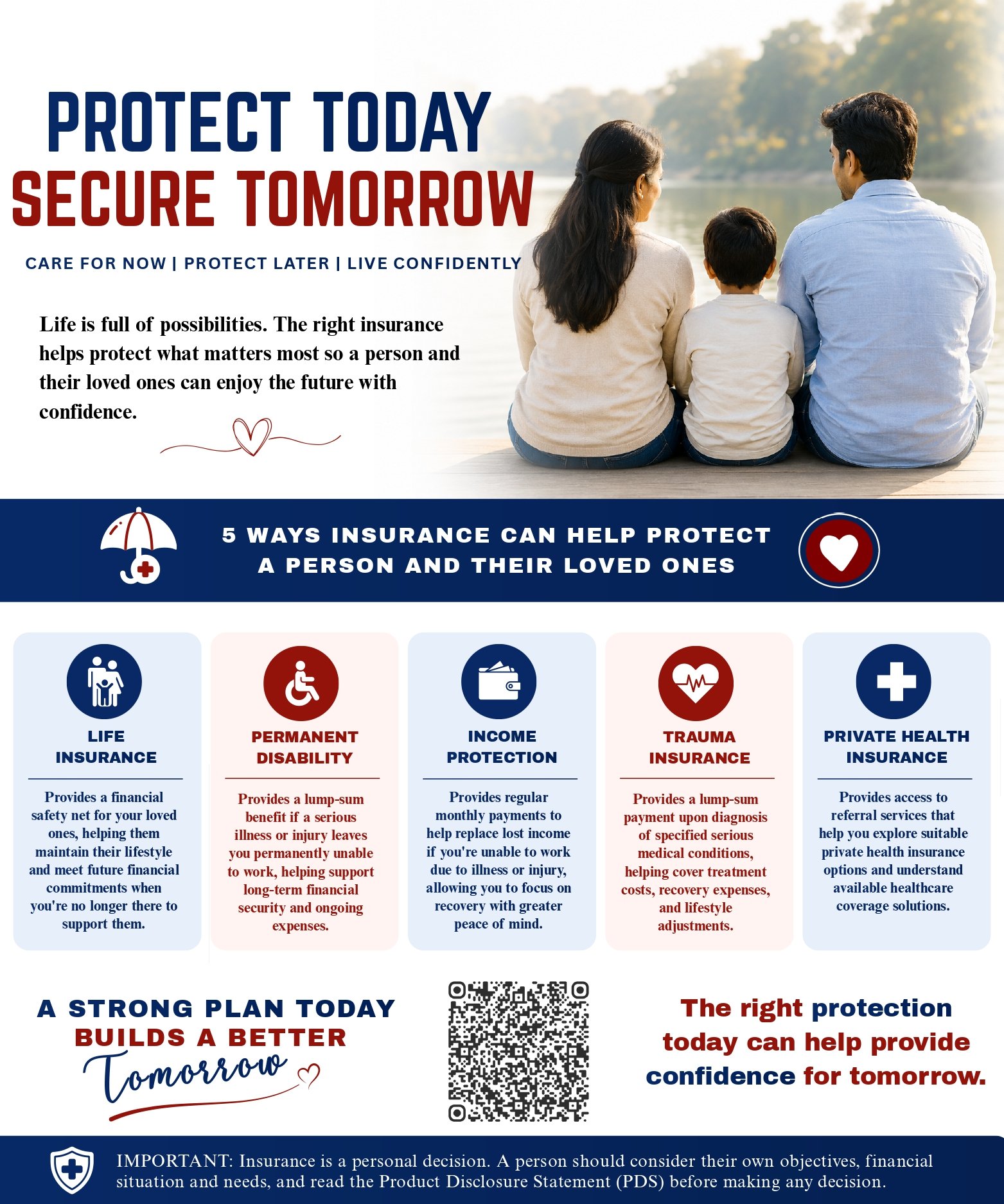
Pays a lump sum to your beneficiaries if you pass away, or if you're diagnosed with a terminal illness. It's typically used to clear debts such as a mortgage, replace lost income for a family, or cover future costs like children's education.
TPD (Total and Permanent Disability) Insurance
Pays a lump sum if you become totally and permanently unable to work due to illness or injury. TPD is often held alongside life insurance, but the definitions of "disability" vary significantly between policies — some use an "own occupation" test, others a "any occupation" test, and the applicable definition can affect whether a claim meets the policy's eligibility requirements.
Income Protection Insurance
Pays a monthly benefit if you are unable to work because of illness or injury. The amount payable, waiting period and benefit period depend on the policy and insurer. Some policies may replace a percentage of your pre-tax income, subject to the applicable policy terms and limits.
Trauma (Crisis) Insurance
Pays a lump sum on diagnosis of a specified serious medical condition — such as cancer, heart attack, or stroke — regardless of whether you're able to keep working. It's designed to cover the immediate financial pressures of treatment, recovery, and lifestyle adjustments, separate from any income replacement.
Private Health Insurance
Private health insurance is separate from life risk insurance and operates under a different regulatory framework. If Rapid Smart provides or facilitates referrals for private health insurance, the nature of that service and any relevant relationships or remuneration should be clearly disclosed.
Life Insurance vs Income Protection: A Common Point of Confusion
One of the most frequent questions is whether someone needs life insurance, income protection, or both. They're not interchangeable:
- Life insurance pays out on death or terminal illness — it does nothing for you while you're alive and unable to work.
- Income protection pays a monthly benefit while you can't work due to illness or injury — it does nothing if you pass away.
Life insurance and income protection address different financial risks. Whether either type of cover, or a combination of covers, is appropriate depends on an individual's circumstances, existing cover, financial commitments and objectives.
Inside Super vs Retail Policies: What's the Difference?
Many Australians already hold some level of Life, TPD or Income Protection cover through their superannuation fund, often without realising it. Broadly:
- Insurance through super can sometimes be cheaper or easier to obtain than purchasing cover directly, but the cost, definitions, exclusions, benefit amounts and conditions vary between funds and policies.
- Retail (stand-alone) insurance typically offers more comprehensive definitions, higher and more flexible benefit amounts, and premium-paying flexibility, but at a higher direct cost.
Neither is automatically "better" — it depends on what you're trying to achieve and what you can afford to pay for. Understanding how your existing super cover works is a useful first step before considering anything additional.
What to Look at Before Comparing Policies
When comparing personal insurance options, price is only one part of the picture. Also consider:
- Definitions — particularly for TPD ("own occupation" vs "any occupation") and income protection ("own occupation" vs "suited occupation").
- Waiting periods — how long you must be unable to work before an income protection benefit begins (commonly 30, 60 or 90 days).
- Benefit periods — how long a benefit is paid (e.g. 2 years, 5 years, or to age 65).
- Mental health provisions — some policies cap mental-health-related benefit periods differently to other conditions, even under an otherwise "to age 65" policy.
- Guaranteed renewability and premium structure — stepped premiums rise with age; level premiums start higher but stay flatter over time.
- Claims data — APRA and ASIC publish claims and disputes data for life insurers. This can provide useful context when researching insurers, but claims acceptance rates and average claim times should not be treated as a standalone measure of whether a particular policy is suitable. The type of cover, policy definitions, exclusions and individual circumstances also matter.
- Exclusions and waiting periods — policies can contain exclusions, qualifying periods and other conditions that affect when benefits may be payable. Some life insurance policies include a suicide exclusion period, so the applicable policy wording should always be checked in the relevant PDS.
A Practical Starting Checklist
- Check what you already have. Log into your superannuation account and check what Life, TPD or Income Protection cover is already attached — many people are underinsured simply because they've never checked.
- Work out the gap. Compare your existing cover against your debts, income, dependants and likely future costs.
- Understand the definitions, not just the premium. A cheaper policy with a narrower definition of disability may pay out less often than a more expensive one.
- Review periodically. Life changes — a new mortgage, a new child, a career change — are natural triggers to revisit your cover.
- Get the details in writing. Before making any decision, read the PDS for any product you're considering, and don't rely on a summary alone.
How Rapid Smart Insurance Solutions Can Help
Rapid Smart Insurance Solutions provides general information and general advice about personal insurance products available through its approved panel of insurers.
We can help you understand the features and differences between types of cover, including Life Insurance, TPD Insurance, Income Protection and Trauma Insurance. Where relevant, we can explain policy features such as definitions, waiting periods, benefit periods, exclusions and premium structures.
Any comparisons provided by Rapid Smart are limited to products and insurers available through our approved panel and do not represent the entire Australian insurance market. The availability of a particular product or insurer does not mean that it is suitable for your individual circumstances.
If you require advice that takes into account your personal objectives, financial situation and needs, personal financial advice may be appropriate.
Before making a decision about an insurance product, consider the relevant Product Disclosure Statement (PDS) and, where applicable, the Target Market Determination (TMD), and consider whether the product is appropriate for your circumstances.
If you'd like a clearer picture of your current cover or the options available through our panel, you can book a session or explore our guides on how premiums work and super vs retail insurance.
General Advice Warning: Sanjeet Hooda (AR 462603), trading as Rapid Smart Insurance Solutions, is an authorised representative of Wealth Today Pty Ltd (ABN 62 133 393 263), AFSL 340289. The information in this article is general in nature and does not take into account your personal objectives, financial situation, or needs. Before acting on it, consider its appropriateness to your circumstances and obtain a copy of the relevant Product Disclosure Statement (PDS). We recommend seeking personal financial advice tailored to your situation. Any insurer or product comparisons provided by Rapid Smart are limited to products available through our approved panel and do not represent the entire Australian insurance market. The inclusion or exclusion of an insurer or product from a comparison should not be interpreted as an assessment of the insurer or product's overall quality or suitability.