Life does not come with guarantees, but a family’s financial future does not have to be left completely to chance.
Across Australia, households are facing higher mortgages, rising living costs, childcare expenses, school fees, and everyday bills. For many families, the sudden loss of income due to death, serious illness, or injury could place significant pressure on the household budget, the family home, and long-term financial security.
Mortgages are now larger than ever before. According to the Australian Bureau of Statistics, the average new owner-occupier home loan reached $735,000 in early 2026 — up roughly $75,000 in just twelve months. For many households, mortgage repayments now take up a major portion of monthly income. When this is combined with school fees, childcare, groceries, utilities, and other living expenses, even one unexpected life event can create serious financial stress.
In our experience working with families across NSW, Victoria, and Queensland, the households feeling the most pressure are not always those earning the least. Often, they are families who have taken on a mortgage in the last few years and have not reviewed whether their insurance cover has kept pace with their debt level, income needs, or family responsibilities.
This is not a small issue. Industry research from NobleOak’s 2025 Life Insurance Pulse Report found that almost one in four Australians who already hold life insurance believe their cover may not be enough. That number is even higher among people relying only on default insurance inside their superannuation fund.
This is where life insurance and personal protection cover can play an important role. It is not about focusing on difficult scenarios. It is about helping ensure that dependants, families, and business partners have financial support if an unexpected event occurs.
This guide explains the main types of life insurance and personal protection cover available in Australia in 2026 — what they are, how they work, what can affect premiums, and common mistakes that may leave Australian households underinsured.
Key Takeaways
- Life insurance and personal protection cover in Australia can provide a lump sum or ongoing benefit in the event of death, terminal illness, serious illness, permanent disability, or inability to work due to illness or injury.
- Many Australians may be underinsured, especially those relying only on default cover inside superannuation.
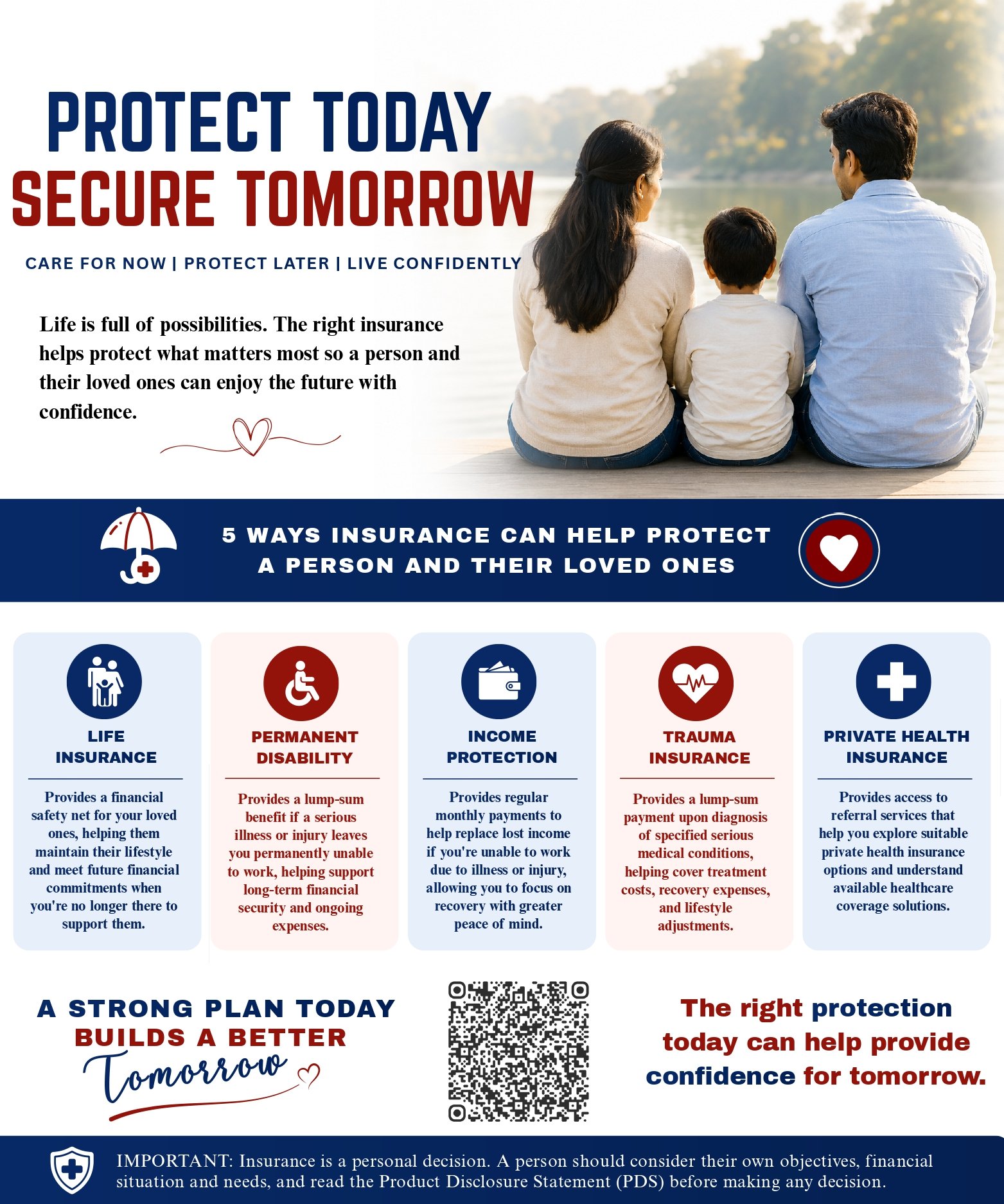
- The main types of cover include Life Cover, Total and Permanent Disability Insurance, Trauma or Critical Illness Cover, Income Protection Insurance, and Business Insurance.
- Premiums can be affected by age, health, occupation, smoking status, lifestyle, and the level of cover selected.
- An insurance adviser can help explain available options, compare multiple insurers, assist with applications, and provide support during the claims process.
What Is Life Insurance?
Life insurance is a contract between a policy owner and an insurer. Premiums are paid regularly, and if a valid claim event occurs, the insurer pays a benefit according to the terms and conditions of the policy.
In Australia, the term “life insurance” is often used broadly to describe a range of personal protection products. These may include Life Cover, Total and Permanent Disability Insurance, Income Protection Insurance, and Trauma or Critical Illness Cover. Each type of cover works differently and is designed to protect against different financial risks.
How It Works
A cover amount is selected, a policy type is chosen, and premiums are usually paid monthly or annually. If a valid claim is accepted, the insurer pays the benefit to the nominated beneficiary, estate, policy owner, or insured person, depending on the policy structure and type of cover.
The benefit may be used for purposes such as reducing a mortgage, covering household expenses, supporting children’s education, paying medical costs, or assisting with business continuity.
Why Life Insurance Is Important in Australia
Family Protection
Life cover can provide financial support to a household when a major life event affects the family’s income or financial stability. This may help dependants maintain their lifestyle, meet ongoing expenses, and avoid immediate financial pressure.
Mortgage Protection
For many Australian households, the home loan is the largest financial commitment. A lump sum insurance benefit may help reduce or clear debt, providing greater security for the family home.
Income Replacement
For employees, professionals, and self-employed Australians, income is often the foundation of financial stability. Income Protection Insurance can provide a monthly benefit when illness or injury prevents work for a period of time, subject to policy terms.
Business Continuity
Business owners face additional risks if an owner, partner, or key person becomes seriously ill, permanently disabled, or passes away. Business insurance may assist with buy/sell arrangements, key person protection, debt repayment, or ongoing business expenses.
Funeral and Final Expenses
Funeral and final expenses can create an unexpected cost for families. Life cover may help reduce this financial burden during an already difficult time.
Types of Life Insurance and Personal Protection Cover Available in Australia
Life Cover
Life Cover, sometimes called Term Life Insurance, pays a lump sum in the event of death or terminal illness, subject to the policy terms. It is commonly used for mortgage protection, family protection, debt repayment, and future living expenses.
Total and Permanent Disability Insurance
TPD Insurance pays a lump sum if the insured person becomes totally and permanently disabled and is unlikely to work again, depending on the policy definition. This cover may be important for people whose income depends on their ability to work.
Trauma Insurance
Trauma Insurance, also known as Critical Illness Cover, pays a lump sum if the insured person is diagnosed with a specified serious medical condition such as cancer, heart attack, or stroke, subject to policy definitions. This benefit can assist with medical costs, recovery time, household expenses, and lifestyle adjustments.
Income Protection Insurance
Income Protection Insurance provides a monthly benefit if illness or injury prevents the insured person from working for a period of time. Depending on the policy, this may replace a portion of income and help cover everyday expenses such as mortgage repayments, rent, utilities, groceries, and family costs.
Business Insurance
Business Insurance may include key person insurance, buy/sell insurance, and business expenses cover. These policies are designed to help protect business owners, partnerships, and companies from financial disruption caused by death, serious illness, or disability of an important person in the business.
Comparison Table: Types of Cover in Australia
| Cover Type | What It Pays | Claim Trigger | Commonly Used For |
|---|---|---|---|
| Life Cover | Lump sum | Death or terminal illness | Families, mortgage holders |
| TPD Insurance | Lump sum | Permanent disability | Workers, business owners, families |
| Trauma Insurance | Lump sum | Diagnosis of a specified serious illness | Medical costs, recovery support |
| Income Protection | Monthly benefit | Temporary illness or injury affecting work capacity | Employees and self-employed people |
| Business Insurance | Lump sum or ongoing benefit | Death, illness, or disability of a key person | Business owners and partnerships |
How Much Life Insurance May Be Needed in Australia?
There is no single amount that suits every household. The right level of cover depends on income, debts, dependants, existing savings, assets, and future financial needs.
A common starting point is to consider:
Total Cover Needed = Debts + Future Living Expenses + Education Costs + Funeral Costs − Existing Assets and Savings
This can include:
- Mortgage balance
- Personal loans and credit cards
- Ongoing household living expenses
- Children’s education costs
- Childcare expenses
- Funeral and final expenses
- Existing savings, superannuation, and investments
- Current insurance is already in place
This is a guide only. Cover needs can change over time and should be reviewed after major life events such as buying a property, having children, changing employment, starting a business, or taking on new debt.
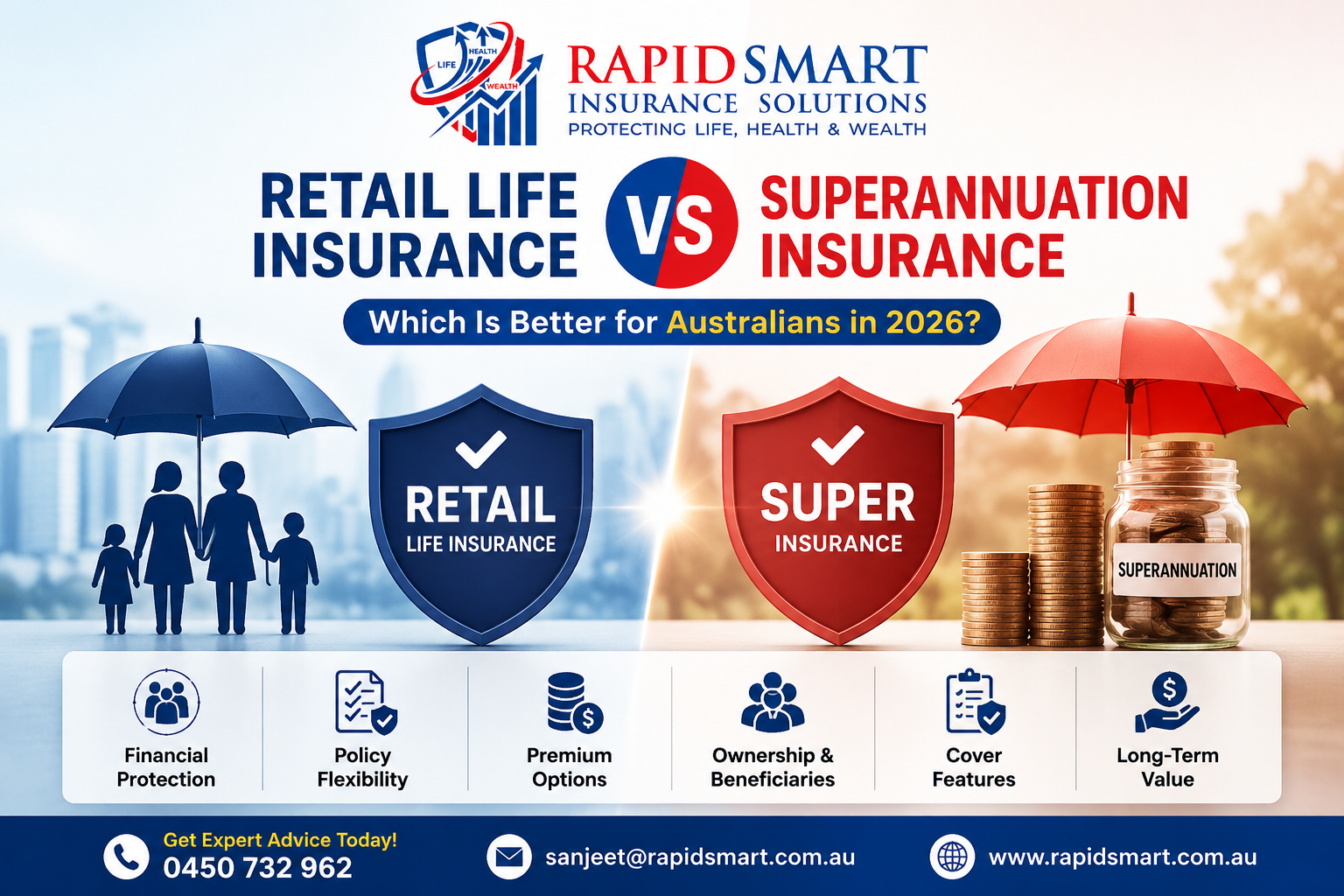
Life Insurance Through Superannuation vs Retail Policies
Many Australians hold default life insurance inside their superannuation fund. This can be useful, but it may not always provide the level of cover, flexibility, or policy features required by a household.
| Feature | Insurance Through Super | Retail Policy |
|---|---|---|
| Premium Funding | Paid from super balance | Paid from personal cash flow |
| Cover Amount | Often default or limited | Usually more flexible |
| Policy Ownership | Held through super trustee | Held personally or through another structure |
| Policy Features | May be limited | Broader options may be available |
| Claims Process | May involve trustee review | Usually handled directly with the insurer |
| Tax Treatment | May depend on the beneficiary | May differ depending on structure |
For some Australians, a combination of insurance through super and retail cover outside super may provide a more suitable structure. This depends on individual circumstances, affordability, policy terms, and taxation considerations.
Common Mistakes Australians Make When Buying Life Insurance
Relying Only on Default Super Cover
Default insurance inside super may provide a useful starting point, but it is often not designed around a household’s specific mortgage, income, dependents, or lifestyle needs.
Choosing the Cheapest Policy Only
The cheapest policy may not always provide the most suitable protection. Definitions, exclusions, waiting periods, benefit periods, and claim conditions can vary significantly between insurers.
Not Reviewing Cover Regularly
Life changes over time. A policy that was suitable several years ago may no longer match current income, debt levels, family responsibilities, or business commitments.
Letting Policies Lapse
Missed premium payments can cause a policy to lapse, meaning cover may no longer be available when it is needed most.
Not Understanding Policy Definitions
TPD, Trauma, and Income Protection definitions can vary from insurer to insurer. Understanding these definitions is important before selecting cover.
Benefits of Working with an Insurance Adviser
An insurance adviser can help explain available options, compare policies across multiple insurers, assist with applications, and provide support if a claim needs to be made.
An adviser may assist with:
- Explaining different types of cover
- Comparing insurer options
- Structuring cover inside or outside the super
- Understanding policy features and limitations
- Assisting with applications and underwriting
- Supporting clients through the claims process
- Reviewing the cover as circumstances change
Why Choose Rapid Smart Insurance Solutions?
At Rapid Smart Insurance Solutions, we understand that life insurance is not just paperwork. It is about helping Australian families, professionals, self-employed individuals, and business owners make informed decisions about financial protection.
We assist with Life Cover, TPD Insurance, Income Protection Insurance, Trauma or Critical Illness Cover, and business protection needs.
Our focus is on helping clients understand available options, compare cover, and put suitable protection in place based on their circumstances and budget.
How We Can Help
- Explanation of Life, TPD, Trauma, and Income Protection cover
- Comparison of options across multiple insurers
- Support with applications and insurer requirements
- Guidance around cover through superannuation and outside superannuation
- Assistance with policy reviews
- Claims support when needed
Conclusion
Life insurance and personal protection cover are not about expecting the worst. They are about helping create financial stability for families, households, and businesses when unexpected events occur.
The right cover can help with mortgage protection, income replacement, medical recovery costs, family expenses, and business continuity.
For many Australians, the biggest risk is not having any cover at all — it is having cover that has not been reviewed for many years and may no longer match current financial responsibilities.
Ready to Review Your Cover?
Rapid Smart Insurance Solutions can help explain the options available and assist with comparing cover across leading Australian insurers.
Contact us today for a free, no-obligation general advice consultation.
Rapid Smart Insurance Solutions
Sanjeet Hooda
Phone: 0450 732 962
Email: sanjeet@rapidsmart.com.au
Book a Session for Consultancy
General Advice Warning
Sanjeet Hooda [AR 462603] trading as Rapid Smart Insurance Solutions is an authorised General Advice representative of Wealth Today Pty Ltd ABN 62 133 393 263, AFSL 340289.
The information provided is general in nature only and does not consider personal objectives, financial situation or needs. Before deciding, consider whether the information is appropriate and read the relevant Product Disclosure Statement and Target Market Determination.