Life Doesn't Come with Guarantees—Your Family's Financial Future Can
At 38, Daniel thought he had everything under control. He and his wife had just bought a home in Brisbane, their two children had started primary school, and life was busy but rewarding. Then a serious illness forced him to stop working for months. The mortgage didn't stop. School fees didn't stop. Everyday bills kept arriving.
Stories like Daniel's are why many Australians begin looking into life insurance—not because they expect the worst, but because they want to protect the people who matter most.
Life is full of milestones: buying your first home, building a career, starting a business, getting married, or raising children. These achievements often come with long-term financial commitments, and while most Australians plan carefully for the future, many overlook one of the most important parts of financial planning—protecting their income and loved ones if life takes an unexpected turn.
In Australia, families are managing higher mortgage repayments, increasing living costs, childcare expenses, education fees, and everyday household bills. For many households, losing a primary income because of death, serious illness, or permanent disability could place enormous financial pressure on the family.
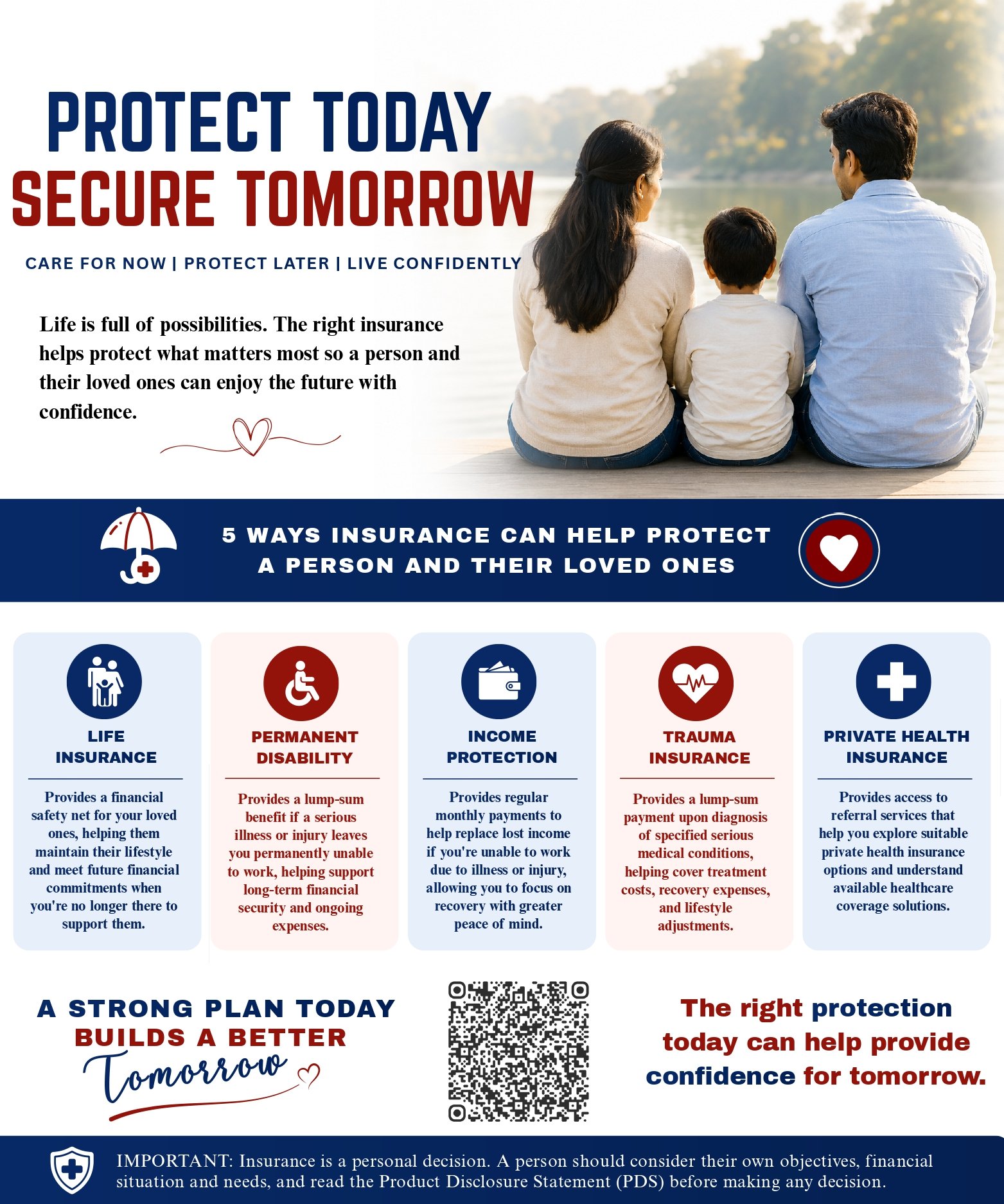
Life insurance is designed to help reduce that financial uncertainty. Depending on the policy, it can provide a lump-sum payment or ongoing income support to help meet mortgage repayments, maintain household expenses, fund children's education, cover medical costs, or support business continuity.
Whether you're a young professional buying your first home, a parent raising a family, a self-employed tradie, or a business owner planning for the future, choosing the right insurance can provide greater financial confidence and peace of mind.
Rapid Smart Expert Insight
In our experience, one of the most common issues is that people assume the insurance included with their super fund is enough simply because it's already there. Once we review their mortgage, household expenses and family responsibilities, many discover their cover may not align with their current financial needs. That's why we encourage clients to review their insurance after major life events rather than relying on default cover indefinitely.
Why This Guide Is Different
Many articles explain what life insurance is, but very few help Australians choose the right cover for their personal circumstances.
This guide has been created to help you:
- Understand how life insurance works in Australia.
- Compare Life Cover, TPD Insurance, Trauma Insurance, and Income Protection Insurance.
- Learn how premiums are calculated.
- Understand the difference between insurance inside superannuation and retail policies.
- Avoid common mistakes when selecting cover.
- Know when to review your insurance as your life changes.
- Understand how an adviser can help compare options from multiple insurers.
- Make informed decisions based on your financial goals and family responsibilities.
Rather than focusing on selling a product, this guide aims to explain the available options in plain English so you can have more informed discussions before making any decisions.
Why Life Insurance Matters More Than Ever in 2026
Australia has experienced significant increases in housing costs, household expenses, and debt levels in recent years. Many families are carrying larger financial commitments than ever before, making income protection and financial planning increasingly important. Your current article also highlights that growing mortgage sizes and living costs have increased the financial pressure on Australian households.
Consider the impact if the primary income earner:
- Passes away unexpectedly.
- Is diagnosed with cancer or another serious illness.
- Suffers a stroke or heart attack.
- Becomes permanently disabled.
- Unable to work for months due to illness or injury.
Without appropriate financial protection, families may need to rely on savings, sell assets, reduce their lifestyle, or take on additional debt to meet ongoing commitments.
Insurance cannot prevent these events from occurring, but it can help reduce their financial impact.
Who Should Consider Life Insurance?
While everyone's needs are different, life insurance may be worth considering if you:
- Have a mortgage or significant personal debt.
- Have children or other financial dependants.
- Share financial commitments with a partner.
- Own a business or are self-employed.
- Have ageing parents who rely on your support.
- Want to protect your family's future lifestyle.
- Want to provide financial certainty if you're unable to work.
The amount and type of cover depend on your circumstances, income, assets, debts, and long-term financial goals.
What You'll Learn in This Guide
Over the following sections, you'll learn:
- What life insurance is and how it works.
- The five main types of personal protection cover available in Australia.
- How insurers assess premiums.
- How much cover many Australians consider.
- Superannuation insurance versus retail insurance.
- Common exclusions and waiting periods.
- Claims and underwriting.
- Common mistakes to avoid.
- Insurance strategies for families, professionals, business owners, and self-employed Australians.
- Frequently asked questions and practical guidance.
Understanding the Different Types of Life Insurance in Australia
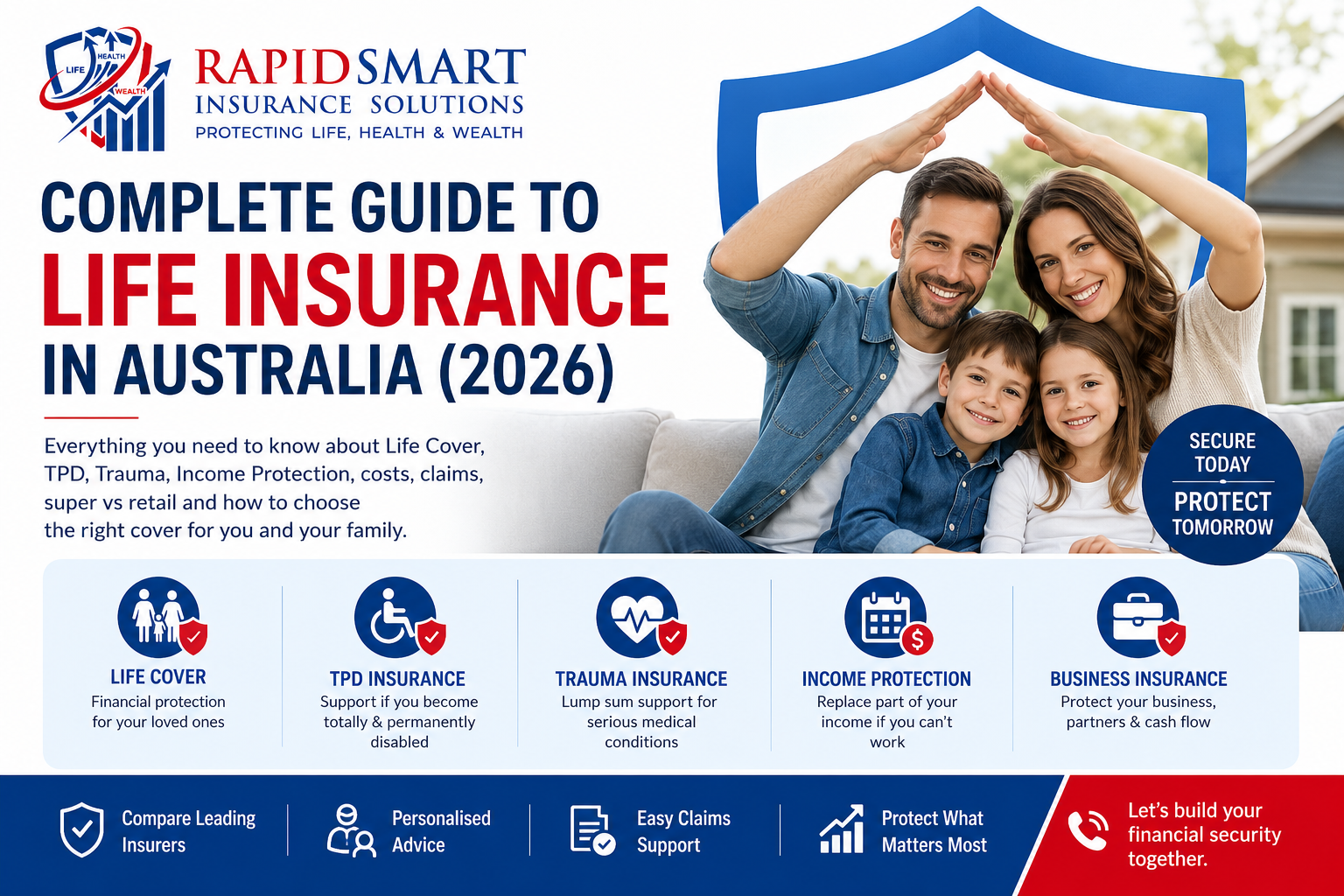
| Insurance Type | Pays | Common Claim Event | Best For |
|---|---|---|---|
| Life Cover | Lump Sum | Death or Terminal Illness | Families, Mortgage Holders |
| TPD Insurance | Lump Sum | Permanent Disability | Professionals, Employees, Business Owners |
| Trauma Insurance | Lump Sum | Serious Medical Condition | Families, Individuals with Health Risks |
| Income Protection | Monthly Benefit | Illness or Injury Preventing Work | Salaried & Self-Employed Australians |
| Business Insurance | Lump Sum or Ongoing Benefit | Death, Disability or Serious Illness of Key Person | Businesses & Partnerships |
Life Cover (Term Life Insurance)
Life Cover is the foundation of most personal insurance plans. It provides a lump-sum payment if the insured person dies or is diagnosed with a terminal illness that meets the policy conditions. Your original article explains that this benefit is commonly used for mortgage protection, family protection, debt repayment, and future living expenses.
Why Australians Choose Life Cover
For many families, one person's income supports the household. If that income suddenly stops, surviving family members may struggle to keep up with:
- Mortgage repayments
- Rent
- School fees
- Childcare expenses
- Utility bills
- Everyday living costs
- Future education expenses
- Outstanding loans
A Life Cover payout can help ease these financial pressures.
Example
James and Sarah live in Melbourne with two young children.
- Mortgage: $820,000
- Savings: $45,000
- Two dependent children
- James earns $145,000 per year
If James unexpectedly passed away, Sarah would face ongoing household expenses and a substantial mortgage. A Life Cover benefit could help reduce debt and provide financial support while the family adjusts to their new circumstances.
Common Uses of Life Cover
Life Cover may be used to:
- Repay or reduce a mortgage
- Pay outstanding debts
- Replace lost family income
- Fund children's education
- Cover funeral costs
- Leave a financial legacy
- Assist with estate planning
- Support business succession arrangements
Who Should Consider Life Cover?
Life Cover may be appropriate for:
- Parents
- Couples with shared financial commitments
- Mortgage holders
- Business owners
- Self-employed individuals
- Professionals
- People supporting ageing parents
- Anyone with financial dependants
Advantages
✔ Financial protection for loved ones
✔ Can reduce financial stress during difficult times
✔ Helps maintain family lifestyle
✔ Can protect business interests
✔ Can assist with debt repayment
Things to Consider
Life Cover is not designed to replace income if you're temporarily unable to work—that is generally the role of Income Protection Insurance.
Total and Permanent Disability (TPD) Insurance
Many people worry about what would happen if they died unexpectedly, but fewer consider the financial impact of surviving a serious illness or injury that permanently prevents them from working.
TPD Insurance is designed to address that risk. As your current guide notes, it may pay a lump sum if the insured person becomes totally and permanently disabled according to the policy definition.
Unlike Life Cover, which pays on death or terminal illness, TPD Insurance focuses on permanent loss of earning capacity.
What Can a TPD Benefit Be Used For?
A payout may help with:
- Paying off part or all of a mortgage
- Home modifications
- Medical treatment
- Rehabilitation costs
- Ongoing care
- Replacing future income
- Paying outstanding debts
- Funding lifestyle adjustments
Example
Emma, a 41-year-old physiotherapist, suffers a spinal injury in a car accident and is unable to return to work.
A TPD benefit may help her:
- Reduce financial pressure by paying down debt
- Modify her home for accessibility
- Cover rehabilitation expenses
- Maintain household financial stability
The availability of a benefit depends on the policy terms and whether the insurer accepts the claim.
Occupations That Often Consider TPD Insurance
- Doctors
- Nurses
- Teachers
- Engineers
- IT professionals
- Tradies
- Electricians
- Builders
- Business owners
- Self-employed Australians
Trauma Insurance (Critical Illness Cover)
Medical advances mean many Australians survive serious illnesses such as cancer, stroke, or heart attack. However, treatment, recovery time, and lifestyle adjustments can place considerable financial strain on individuals and families.
Trauma Insurance provides a lump-sum payment if the insured person is diagnosed with a specified medical condition covered by the policy. Your current article highlights common examples such as cancer, heart attack, and stroke.
Unlike TPD Insurance, you do not necessarily need to be permanently unable to work to make a claim. Eligibility depends on the policy definitions and the medical condition.
How People May Use a Trauma Benefit
A Trauma Insurance payout could assist with:
- Medical treatment
- Specialist consultations
- Recovery and rehabilitation
- Travel for treatment
- Household expenses during recovery
- Childcare support
- Reducing financial stress while focusing on recovery
Example
Michael is diagnosed with a serious illness that requires surgery and several months away from work.
While he recovers, his family still has to manage:
- Mortgage repayments
- School fees
- Groceries
- Utility bills
- Transport costs
A Trauma Insurance benefit can provide additional financial flexibility during this period, subject to the policy terms.
Income Protection Insurance
For many Australians, their greatest financial asset isn't their home—it's their ability to earn an income.
If illness or injury prevents you from working, Income Protection Insurance can provide a monthly benefit for a period defined by the policy. As your original article explains, this benefit can help cover everyday expenses such as mortgage repayments, rent, utilities, groceries, and family costs.
Why Income Protection Matters
Many households rely on regular pay cheques to meet ongoing commitments.
Income Protection may help cover:
- Mortgage repayments
- Rent
- Household bills
- Groceries
- Childcare
- School fees
- Loan repayments
- Day-to-day living expenses
The amount paid, waiting period, and benefit period vary by policy.
Suitable For
Income Protection is commonly considered by:
- Employees
- Self-employed Australians
- Contractors
- Professionals
- Small business owners
- Tradespeople
- Consultants
- Healthcare professionals
Business Insurance
Business owners often have additional financial responsibilities beyond their personal commitments.
If a key person, partner, or owner dies or becomes seriously ill, the business itself may face financial disruption.
Your current article notes that Business Insurance can include key person insurance, buy/sell insurance, and business expenses cover to help businesses manage these risks.
Business Insurance May Help With
- Key Person Protection
- Buy/Sell Agreements
- Business Loan Protection
- Business Expense Cover
- Partnership Continuity
- Cash Flow Support
Example
Two business partners each own 50% of a successful construction company.
If one partner unexpectedly passes away, Business Insurance may provide funds to support agreed succession arrangements, helping the remaining partner continue operating the business while meeting financial obligations, subject to the policy terms.
Can You Have More Than One Type of Cover?
Yes.
Many Australians choose a combination of insurance products because each one protects against a different type of financial risk.
A common protection strategy might include:
- Life Cover – to support loved ones after death or terminal illness.
- TPD Insurance – to provide financial support following permanent disability.
- Trauma Insurance – to assist after a specified serious medical condition.
- Income Protection Insurance – to help replace part of your income if illness or injury prevents you from working.
- Business Insurance – where appropriate, to protect business continuity.
The most suitable combination depends on your income, debts, family responsibilities, occupation, assets, and long-term financial goals.
Rapid Smart Expert Insight
Many people tell us they want to "wait a few years" before taking out life insurance. In practice, we often see that applying while you're younger and in good health may provide access to more favourable underwriting outcomes than waiting until after a significant health change. Every application is assessed individually, but delaying isn't always the most cost-effective approach.
How Much Life Insurance Do You Need in Australia?
One of the first questions Australians ask is:
"How much life insurance do I actually need?"
The honest answer is that there is no one-size-fits-all amount.
The right level of cover depends on your financial situation, family responsibilities, income, debts, assets, and long-term goals. Your existing guide explains that factors such as debts, future living expenses, education costs, existing savings, and life changes should all be considered when estimating cover needs.
A single person renting an apartment will usually have very different insurance needs from a couple with three children and an $850,000 mortgage.
Instead of asking,
"How much insurance should everyone have?"
A better question is:
"If something happened to me tomorrow, how much money would my family need to maintain financial stability?"
The Five-Step Formula for Estimating Your Cover
A practical starting point is to calculate:
Step 1: Outstanding Debts
Include every major financial commitment:
- Home loan
- Investment property loans
- Personal loans
- Car loans
- Credit card balances
- Business loans (if personally guaranteed)
Example
Mortgage: $780,000
Car Loan: $35,000
Credit Cards: $15,000
Total Debt = $830,000
Step 2: Replace Future Income
For many families, replacing lost income is the largest part of the calculation.
Consider:
- Current annual income
- Number of years dependants may rely on that income
- Existing investments
- Partner's earning capacity
Example
Annual Income:
$120,000
Support Required:
10 years
Potential Income Requirement:
$1.2 million
This doesn't necessarily mean you need exactly this amount of cover, but it helps illustrate the financial impact of a loss of income.
Step 3: Children's Future Costs
Parents often want insurance to help ensure their children's future plans remain achievable.
Consider:
- School fees
- University education
- Childcare
- Extracurricular activities
- Living expenses
Step 4: Final Expenses
Many people forget to include:
- Funeral costs
- Legal expenses
- Estate administration
- Medical costs
Step 5: Deduct Existing Assets
Subtract assets already available.
Examples:
- Savings
- Investments
- Existing Life Insurance
- Superannuation
- Other financial assets
Example Calculation
| Item | Amount |
|---|---|
| Mortgage | $780,000 |
| Other Loans | $40,000 |
| Children's Education | $180,000 |
| Income Replacement | $900,000 |
| Funeral Costs | $20,000 |
| Subtotal | $1,920,000 |
| Less Savings | -$150,000 |
| Less Investments | -$120,000 |
| Existing Insurance | -$250,000 |
| Estimated Cover Required | $1,400,000 |
This example is illustrative only. Your personal circumstances may require more or less cover.
Life Stages and Insurance Needs
Young Professionals
Typical priorities include:
- Income Protection
- TPD Insurance
- Basic Life Cover
- Trauma Insurance
Common goals
✔ Protect income
✔ Cover debts
✔ Build long-term financial security
Young Families
Insurance needs often increase after:
- Marriage
- Purchasing a home
- Having children
Typical priorities include:
- Higher Life Cover
- Income Protection
- Trauma Insurance
- TPD Insurance
Established Families
At this stage, people often have:
- Larger mortgages
- Teenagers
- Education expenses
- Investments
- Higher incomes
Policies should be reviewed regularly to ensure cover still reflects current responsibilities.
Empty Nesters
As children become financially independent:
- Mortgage balances may reduce.
- Financial priorities may change.
- Existing cover may need adjusting.
Some people choose to reduce cover, while others maintain it for estate planning or other financial objectives.
Business Owners
Business owners often have additional considerations, including:
- Business loans
- Key employees
- Business partners
- Personal guarantees
- Succession planning
A combination of personal and business protection may be appropriate depending on the business structure and financial obligations.
What Affects Your Premium?
Many Australians wonder why premiums differ from one person to another.
Insurers generally assess several factors when determining premiums.
1. Age
Age is one of the most significant pricing factors.
In general:
- Younger applicants often pay lower premiums.
- Premiums usually increase with age because the likelihood of a claim increases over time.
2. Health
During the application process, insurers may ask about:
- Height and weight
- Medical history
- Current medications
- Previous surgeries
- Family medical history
Depending on the circumstances, additional medical information may be requested.
3. Smoking Status
Smoking is commonly associated with higher insurance premiums because it is linked to increased health risks.
This may include:
- Cigarettes
- Cigars
- Some vaping or nicotine products (depending on insurer definitions)
Each insurer applies its own underwriting criteria.
4. Occupation
Occupation can also influence premiums.
For example:
Lower-risk occupations may include:
- Accountants
- Teachers
- Office professionals
- IT specialists
Higher-risk occupations may include:
- Construction workers
- Miners
- Roofers
- Electricians
- Heavy machinery operators
The level of occupational risk considered depends on the insurer's underwriting guidelines.
5. Lifestyle
Some hobbies and activities may affect underwriting.
Examples include:
- Skydiving
- Scuba diving
- Motorsport
- Aviation
- Mountaineering
Not every activity results in additional premiums, but it is important to disclose relevant information during the application process.
6. Amount of Cover
Generally:
Higher insured amounts may result in higher premiums because the potential benefit payable by the insurer is greater.
7. Type of Policy
Different insurance products are priced differently.
For example:
- Life Cover
- TPD Insurance
- Trauma Insurance
- Income Protection Insurance
Each has its own risk profile and underwriting approach.
Medical Underwriting Explained
Many Australians worry that applying for life insurance will involve complicated medical tests.
In practice, underwriting varies based on:
- Your age
- The type and amount of cover
- Your medical history
- The insurer's requirements
Depending on your circumstances, the insurer may request:
- A health questionnaire
- Medical reports
- Blood tests
- A medical examination
Providing complete and accurate information helps the insurer assess your application and reduces the risk of issues if a claim is made later.
When Should You Review Your Insurance?
Insurance should not be treated as a "set and forget" financial product.
It's sensible to review your cover after major life events, including:
- Buying a home
- Getting married
- Having children
- Changing jobs
- Starting a business
- Taking on new debt
- Receiving a significant salary increase
- Paying off your mortgage
- Divorce or separation
Regular reviews help ensure your cover continues to reflect your financial responsibilities and goals.
Common Mistakes When Calculating Cover
Avoid these common pitfalls:
❌ Choosing a cover amount based solely on affordability.
❌ Forgetting to include future education costs.
❌ Ignoring inflation and rising living expenses.
❌ Relying only on default insurance through superannuation without checking whether it meets your needs.
❌ Never reviewing your policy after major life changes.
Rapid Smart Expert Insight
One pattern we've noticed is that many Australians review their home loan every year but don't review their life insurance for five years or more. Buying a home, getting married, welcoming a child or changing jobs can all affect how much protection is appropriate, making regular reviews worthwhile.
Life Insurance Through Super vs Retail Insurance in Australia – Which Option Is Right for You?
One of the most common questions Australians ask is:
"Should I keep my life insurance inside my superannuation, or should I buy a retail policy?"
The answer depends on your personal circumstances, financial goals, budget, and the type of protection you need.
Many Australians already have some default life insurance through their super fund, often without realising it. While this can provide a useful starting point, it may not always offer enough cover or the flexibility required for growing families, professionals, or business owners. Your existing article explains that insurance through super and retail policies differ in areas such as funding, ownership, flexibility, and claims.
The important question isn't "Which one is better?"
It's:
"Which option best suits my financial situation?"
What Is Life Insurance Through Super?
Many Australian superannuation funds automatically provide members with default insurance.
Depending on the fund, this may include:
- Life Cover
- Total and Permanent Disability (TPD) Insurance
- Income Protection Insurance
Premiums are generally deducted from your super balance rather than your bank account.
For some people, this can be a convenient and cost-effective way to obtain basic protection.
Advantages of Insurance Through Super
1. No Direct Monthly Payments
Because premiums are usually paid from your super account:
✔ No monthly debit from your personal bank account
This may assist people who want insurance while managing household cash flow.
2. Automatic Cover
Many employees receive default cover when joining a super fund.
This means:
- Less paperwork initially
- Immediate basic protection (subject to fund rules and eligibility)
3. Helpful for Young Workers
For younger Australians starting their careers, default cover may provide an affordable starting point until their financial responsibilities increase.
Potential Limitations of Insurance Through Super
Although insurance through super can be valuable, it may not suit everyone's needs.
Cover May Not Be Enough
Many Australians assume the default amount will fully protect their family.
In reality, default cover may not reflect:
- Mortgage size
- Income level
- Number of children
- Financial dependants
- Business obligations
For someone with significant financial commitments, the default benefit may be well below what their family would require.
Limited Flexibility
Compared with retail policies, insurance held through super may offer fewer options for:
- Customising benefits
- Adding optional features
- Tailoring cover to changing circumstances
Claims Process
Depending on the policy structure, claims involving insurance through super may include additional administrative steps because the superannuation trustee is involved before benefits are paid. Your existing article notes this distinction between trustee involvement and direct insurer handling.
What Is Retail Life Insurance?
Retail insurance is purchased directly (often with the assistance of a licensed adviser) from an insurer.
The policy is usually owned personally or through another approved ownership structure.
Premiums are generally paid directly from your personal cash flow.
Advantages of Retail Insurance
Retail policies often provide greater flexibility, including:
- Higher levels of available cover
- Broader policy features
- More options for tailoring cover
- Greater choice between insurers
- Flexibility as your financial circumstances change
The availability of specific features depends on the insurer and policy selected.
Side-by-Side Comparison
| Feature | Insurance Through Super | Retail Insurance |
|---|---|---|
| Premiums Paid From | Super balance | Personal bank account |
| Default Cover | Often included | Selected by the applicant |
| Flexibility | Usually more limited | Generally more flexible |
| Ownership | Super trustee | Individual or approved structure |
| Policy Options | Fund-specific | Wider range across insurers |
| Claims | May involve trustee | Usually handled directly with the insurer |
| Suitable For | Basic protection | Tailored personal protection |
Can You Have Both?
Absolutely.
Many Australians combine:
- Basic insurance through super
- Additional retail insurance
For example:
Sarah has:
- $250,000 Life Cover inside super
- $1,000,000 Retail Life Cover
- Retail Income Protection
- Retail Trauma Insurance
This combination may provide broader protection while helping her manage premium costs.
The most suitable approach depends on individual circumstances.
Stepped vs Level Premiums
Another important decision is how your premiums are structured.
Stepped Premiums
With stepped premiums:
- Initial premiums are generally lower.
- Premiums usually increase as you get older.
These are often chosen by younger Australians because they reduce initial costs.
Suitable For
- Younger families
- First-home buyers
- Professionals early in their careers
Level Premiums
With level premiums:
- Initial premiums are generally higher.
- Future increases due to age are reduced (although premiums can still change for other reasons, such as policy-wide repricing).
These may appeal to people planning to keep cover for many years.
Which Is Better?
Neither option is universally better.
It depends on:
- Your age
- Budget
- Long-term plans
- Desired cover period
- Personal financial circumstances
An adviser can explain the differences and help you compare available options.
Understanding Waiting Periods
Some insurance products include a waiting period before benefits become payable.
This is particularly common with Income Protection Insurance.
Examples may include:
- 14 days
- 30 days
- 60 days
- 90 days
In general:
- Shorter waiting periods often result in higher premiums.
- Longer waiting periods may reduce premiums.
The available waiting periods vary between insurers and policies.
Understanding Benefit Periods
For Income Protection Insurance, the benefit period refers to the maximum length of time benefits may be paid while you remain eligible under the policy.
Examples might include:
- 2 years
- 5 years
- To a specified age (where available under the policy)
Choosing a longer benefit period may increase premiums but provide longer-term financial support if a valid claim is accepted.
Common Policy Exclusions
Every insurance policy has terms, conditions, and exclusions.
Examples may include:
- Non-disclosure during the application process
- Certain pre-existing conditions (depending on the policy and underwriting)
- Waiting periods
- Specific exclusions accepted during underwriting
- Events not covered under the policy wording
These vary significantly between insurers.
Always read the:
- Product Disclosure Statement (PDS)
- Target Market Determination (TMD)
- Policy Schedule
before making a decision.
How to Compare Life Insurance Policies
Many people compare policies based only on price.
However, premium is only one factor.
A comprehensive comparison should also consider:
- Amount of cover
- Policy definitions
- Exclusions
- Waiting periods
- Benefit periods
- Claims process
- Financial strength of the insurer
- Policy flexibility
- Optional benefits
- Future review options
Choosing the cheapest policy is not always the best long-term decision if it doesn't provide the protection you need.
Why Professional Advice Can Make a Difference
Life insurance isn't just about purchasing a policy—it's about choosing protection that reflects your personal circumstances.
A licensed insurance adviser can assist by:
- Explaining different types of cover
- Comparing insurers
- Reviewing existing insurance
- Identifying gaps in protection
- Explaining policy features and limitations
- Assisting with applications
- Providing support during the claims process
Your current article also highlights these practical ways an adviser can help clients understand options, compare policies, and navigate applications and claims.
Life Insurance for Australian Families, Professionals & Business Owners – Real-Life Scenarios, Common Mistakes and Practical Guidance
Most Australians don't buy life insurance because they expect something bad to happen—they buy it because the people who depend on them matter.
Whether you're paying off a mortgage, running a business, raising children, or building wealth, insurance is about protecting the financial future you've worked hard to create.
The right insurance strategy is different for everyone. A young professional renting an apartment has different priorities from a family with three children or a business owner responsible for employees.
This section explains how insurance needs often change at different life stages and highlights common mistakes that can leave people underinsured.
Life Insurance for Young Professionals
Many Australians in their 20s and early 30s believe they don't need life insurance because they have:
- No children
- Limited assets
- Good health
However, this is often when insurance can be more affordable, subject to the insurer's underwriting and pricing.
Common Financial Risks
Even without children, you may have:
- A home loan
- Personal loans
- HELP debt (where relevant)
- Car finance
- A partner who relies on your income
- Future financial plans
Many young professionals also underestimate the value of protecting their income.
Your ability to earn an income over the next 30–40 years may be your greatest financial asset.
Recommended Considerations
- Income Protection Insurance
- TPD Insurance
- Basic Life Cover
- Trauma Insurance (depending on circumstances)
Life Insurance for Couples
Marriage or a long-term relationship often creates shared financial responsibilities.
Examples include:
- Joint mortgage
- Household expenses
- Shared savings goals
- Future children
- Investment properties
If one partner unexpectedly dies or becomes unable to work, the surviving partner may struggle to manage these commitments alone.
Insurance can help reduce financial pressure during these difficult circumstances.
Life Insurance for Families
Parents often have the greatest need for financial protection.
Why?
Because children depend on them financially.
If a parent passes away or can no longer work, ongoing expenses continue.
These may include:
- Mortgage repayments
- Groceries
- School fees
- Childcare
- Utility bills
- Sporting activities
- Medical expenses
Life insurance helps create financial stability while the family adjusts.
Example
David and Emma have:
- Two children
- An $850,000 mortgage
- Combined income of $240,000
If David unexpectedly passed away:
Emma may still need to pay:
- Mortgage
- Household bills
- Education costs
- Daily living expenses
A Life Cover benefit could help reduce debt and provide financial support while she plans for the future.
Life Insurance for Self-Employed Australians
Being self-employed provides flexibility—but also creates unique financial risks.
Unlike employees, many self-employed Australians:
- Do not receive paid sick leave
- Have no employer-funded income protection
- Depend entirely on their ability to work
If illness prevents them from working, business income may stop immediately while expenses continue.
Consider:
- Income Protection
- Life Cover
- TPD Insurance
- Trauma Insurance
These products can play different roles in protecting both personal and business finances.
Life Insurance for Business Owners
Business owners often have responsibilities beyond their own household.
These may include:
- Employees
- Business loans
- Commercial leases
- Equipment finance
- Business partners
- Key clients
Insurance planning can help address financial risks that affect both the business and the owner's family.
Key Person Insurance
Imagine your business relies heavily on one director or senior employee.
If that individual dies or becomes seriously ill:
The business may experience:
- Reduced revenue
- Recruitment costs
- Loss of client relationships
- Delayed projects
- Cash flow challenges
Key Person Insurance is designed to help businesses manage these types of financial disruptions, subject to policy terms.
Buy/Sell Insurance
Many businesses have multiple owners.
A Buy/Sell arrangement can help ensure that ownership transitions according to a pre-agreed plan if an owner dies or becomes permanently disabled.
This can provide greater certainty for:
- Remaining owners
- Family members
- Employees
- Clients
Insurance for Different Occupations
Insurance needs can vary depending on occupation.
Healthcare Professionals
Doctors, nurses and allied health professionals often rely on their ability to continue practising.
Many consider:
- Income Protection
- TPD
- Trauma Insurance
Teachers
Teachers may wish to protect:
- Household income
- Mortgage repayments
- Children's education
- Family financial security
Tradies
Electricians
Builders
Carpenters
Roofers
Plumbers
These occupations often involve greater physical demands.
A serious injury may affect the ability to continue working.
Income Protection and TPD Insurance are commonly considered because they focus on protecting earning capacity.
IT Professionals
Although office-based occupations may involve lower physical risk, illness can still affect the ability to earn an income.
Many professionals consider:
- Life Cover
- Income Protection
- Trauma Insurance
Common Life Insurance Claim Scenarios
Every claim is assessed according to the policy terms, conditions, definitions, and the insurer's claims process.
Examples of situations where claims may arise include:
Life Cover
- Death
- Terminal illness (where covered)
TPD Insurance
- Permanent spinal injuries
- Severe neurological conditions
- Permanent loss of working capacity
Trauma Insurance
- Certain cancers
- Heart attack
- Stroke
- Other specified critical illnesses
Income Protection
- Serious back injuries
- Mental health conditions (where covered and subject to policy terms)
- Recovery after surgery
- Extended illness preventing work
The 15 Biggest Mistakes Australians Make
1. Assuming Default Super Cover Is Enough
Many Australians never check:
- Amount of cover
- Beneficiaries
- Policy definitions
Your existing guide also notes that relying solely on default insurance through super may leave households underinsured.
2. Buying Only the Cheapest Policy
Price matters.
But value matters more.
Policies with lower premiums may have different features, definitions, waiting periods, or exclusions.
3. Never Reviewing Cover
Life changes.
Insurance should change too.
Major events include:
- Marriage
- Children
- Mortgage
- Salary increase
- Business purchase
4. Underestimating Future Costs
People often forget:
- Inflation
- School fees
- Future living expenses
5. Not Disclosing Medical History
Always answer application questions honestly and completely.
Incomplete disclosure can affect underwriting and claims.
6. Ignoring Income Protection
Many people insure:
✔ House
✔ Car
But not:
Their income.
For most Australians, their ability to earn an income is one of their most valuable financial assets.
7. Cancelling Existing Cover Too Early
Never cancel an existing policy until replacement cover has been issued and you understand the implications of making changes.
8. Forgetting Business Risks
Business owners often insure equipment.
But not themselves.
If the owner cannot work, the financial impact on the business can be significant.
9. Choosing Cover Based on Friends' Recommendations
Insurance should reflect:
- Your income
- Your debts
- Your family
- Your occupation
- Your goals
What suits one person may not suit another.
10. Not Reading the Product Disclosure Statement (PDS)
The PDS explains:
- Benefits
- Exclusions
- Waiting periods
- Claim conditions
Understanding these documents is important before making a decision.
11. Ignoring Beneficiary Nominations
Keeping beneficiary details current can help ensure your wishes are reflected where applicable.
12. Forgetting to Update Cover After Buying Property
A larger mortgage often means greater financial responsibilities.
13. Not Considering Future Children
Insurance needs often increase after starting a family.
Planning ahead may help avoid gaps in protection.
14. Waiting Until Health Changes
Insurance applications generally consider your health at the time you apply.
Applying earlier may provide more options than waiting until after a medical condition develops, although every application is assessed individually.
15. Never Seeking Professional Guidance
Choosing life insurance is not just about selecting the lowest premium.
Understanding policy definitions, features, and how different products work together can make a significant difference over the long term.
An adviser can help explain options, compare policies, and review your cover as your circumstances change—services your original article also highlights.
Why Australians Choose Rapid Smart Insurance Solutions
At Rapid Smart Insurance Solutions, we believe insurance should be easy to understand.
Our goal is to help individuals, families, professionals, and business owners make informed decisions by:
- Explaining insurance in plain English.
- Comparing options from leading Australian insurers.
- Reviewing existing cover.
- Identifying potential gaps in protection.
- Assisting with applications.
- Supporting clients through the claims process.
We understand that no two clients are the same, which is why every conversation starts with understanding your circumstances and financial goals.
Rapid Smart Expert Insight
One misconception we hear regularly is that people believe they are more likely to need life insurance than income protection. In reality, many households are more immediately affected by a temporary loss of income than by the long-term financial planning life insurance is designed to address. Understanding the different role each product plays can help build a more balanced protection strategy.
Frequently Asked Questions About Life Insurance in Australia (2026)
When Australians search for life insurance online, they usually have practical questions rather than looking for policy jargon. This FAQ section is designed to answer common concerns in plain English while also targeting long-tail search queries that can help improve organic visibility.
Frequently Asked Questions
1. What is Life Insurance?
Life insurance is a contract between you and an insurer. If a valid claim event occurs, such as death or terminal illness (depending on the policy), the insurer may pay a benefit according to the policy terms. Your current guide explains this basic definition and how benefits may be used for expenses such as mortgages, education, and household costs.
2. Is Life Insurance Worth It?
For many Australians, life insurance provides financial protection for family members or other dependants if an unexpected event occurs.
Whether it is worthwhile depends on your:
- Income
- Debts
- Dependants
- Financial goals
- Existing assets
3. How Much Life Insurance Do I Need?
There is no standard amount.
Your required cover depends on:
- Mortgage
- Income
- Family responsibilities
- Existing savings
- Future expenses
A review with a qualified adviser can help determine an amount appropriate to your circumstances.
4. What Is the Difference Between Life Cover and TPD Insurance?
Life Cover generally pays after death or terminal illness (subject to policy terms).
TPD Insurance may pay if you become permanently disabled and meet the policy definition.
5. What Is Trauma Insurance?
Trauma Insurance provides a lump sum if you're diagnosed with a specified serious medical condition covered by the policy.
Examples may include:
- Certain cancers
- Stroke
- Heart attack
Coverage depends on the insurer and policy wording.
6. What Is Income Protection Insurance?
Income Protection Insurance may provide a monthly benefit if illness or injury prevents you from working and your claim is accepted under the policy.
7. Can I Have More Than One Type of Insurance?
Yes.
Many Australians combine:
- Life Cover
- TPD Insurance
- Income Protection
- Trauma Insurance
Each protects against different financial risks.
8. Is Insurance Through Super Enough?
Not always.
Default insurance through super can be a valuable starting point, but it may not reflect your current mortgage, income, or family responsibilities. Your original article also highlights that many Australians rely on default cover that may not be sufficient for their needs.
9. Does Everyone Need Life Insurance?
No.
Insurance needs vary from person to person.
Some people have:
- No dependants
- Minimal debt
- Significant assets
Others have greater financial responsibilities and may benefit from different types or levels of cover.
10. Can I Change My Cover Later?
In many cases, policies can be reviewed and adjusted as your circumstances change.
Changes may involve underwriting or other insurer requirements.
11. Will My Premium Increase?
It depends.
Premium changes can vary based on:
- Premium structure (stepped or level)
- Age
- Policy-wide repricing
- Changes to your cover
12. What Happens If I Miss a Premium?
If premiums remain unpaid beyond any applicable grace period, your policy may lapse and cover could end.
Always check your insurer's policy terms.
13. Can Self-Employed People Get Life Insurance?
Yes.
Many insurers offer products suitable for:
- Sole traders
- Contractors
- Small business owners
- Company directors
The availability of cover depends on underwriting and policy conditions.
14. Can Smokers Get Life Insurance?
Yes.
However, smoking status may affect premiums because insurers generally consider smoking a higher health risk.
15. Do I Need a Medical Examination?
Not always.
Depending on:
- Your age
- Medical history
- Amount of cover
- Insurer requirements
You may only need to complete a health questionnaire, or you may be asked for additional medical information.
16. Can I Hold More Than One Policy?
In some circumstances, yes.
Some Australians have:
- Insurance through super
- Retail insurance
- Business insurance
This depends on individual needs and insurer rules.
17. What Happens During the Claims Process?
The claims process generally involves:
- Notifying the insurer.
- Providing required documents.
- Medical or other assessments (where applicable).
- The insurer assessing the claim against the policy terms.
- Payment if the claim is accepted.
Timeframes vary depending on the complexity of the claim and the information required.
18. Should I Compare Different Insurers?
Comparing policies can help you understand differences in:
- Premiums
- Features
- Exclusions
- Waiting periods
- Benefit periods
- Claims processes
Price alone should not be the only deciding factor.
19. How Often Should I Review My Policy?
A review is worth considering after major life events such as:
- Marriage
- Buying a home
- Having children
- Starting a business
- Significant income changes
- Paying off major debts
20. How Can Rapid Smart Insurance Solutions Help?
Rapid Smart Insurance Solutions can assist by:
- Explaining different types of cover.
- Comparing options across multiple insurers.
- Reviewing existing insurance.
- Assisting with applications.
- Providing support during the claims process.
These services align with the approach described in your current article.
2026 Life Insurance Trends in Australia
While every person's needs are different, several trends are shaping insurance decisions in Australia:
- Rising mortgage sizes are prompting more households to review their financial protection.
- Self-employed Australians are increasingly considering income protection.
- Families are reviewing default superannuation cover to determine whether it meets their current needs.
- More Australians are seeking personalised advice rather than relying solely on default insurance options.
These trends reinforce the importance of reviewing cover as financial circumstances change.
Life Insurance Checklist Before You Buy
Before choosing a policy, ask yourself:
✅ How much debt would my family need to manage if something happened to me?
✅ How long would they need financial support?
✅ Does my current insurance reflect my mortgage and family responsibilities?
✅ Do I understand what my policy covers—and what it doesn't?
✅ Have I compared more than one insurer?
✅ Have I reviewed the Product Disclosure Statement (PDS)?
✅ Have I nominated the appropriate beneficiaries (where applicable)?
✅ Have I considered whether insurance through super alone is enough?
Why Choose Rapid Smart Insurance Solutions?
Choosing life insurance isn't just about finding the lowest premium.
It's about understanding:
- What you're protecting.
- How different insurance products work together.
- Which policy features matter for your circumstances.
- How to structure your cover effectively.
At Rapid Smart Insurance Solutions, we focus on helping Australians make informed decisions by explaining insurance in plain language, comparing options from multiple insurers, assisting with applications, and providing support throughout the life of the policy.
Ready to Protect What Matters Most?
Whether you're buying your first home, raising a family, running a business, or planning for the future, reviewing your insurance today can help provide greater financial confidence tomorrow.
If you'd like to better understand your options, compare policies from leading Australian insurers, or review your existing cover, the team at Rapid Smart Insurance Solutions is here to help.
Book your free, no-obligation general advice consultation today.
Rapid Smart Insurance Solutions
Author: Sanjeet Hooda (Authorised Representative 462603)
📞 Phone: 0450 732 962
📧 Email: sanjeet@rapidsmart.com.au