When people think about protecting their future, they often focus on savings, investments, property, or Life Insurance. However, one area that is commonly overlooked is the significant financial impact of surviving a serious medical condition.
A major illness, such as cancer, heart attack, or stroke, affects far more than just physical health. The recovery period often involves rising medical expenses, extended time away from work, emotional stress, and lifestyle changes that place immense financial pressure on the entire family.
This is where Trauma Cover (also known as Critical Illness Insurance) becomes an essential pillar of a robust financial protection strategy.
At Rapid Smart Insurance Solutions, we help Australians navigate the complexities of Trauma Insurance in Australia and how it complements other forms of personal cover, including Life Insurance, TPD, and Income Protection.
What is Trauma Cover Insurance?
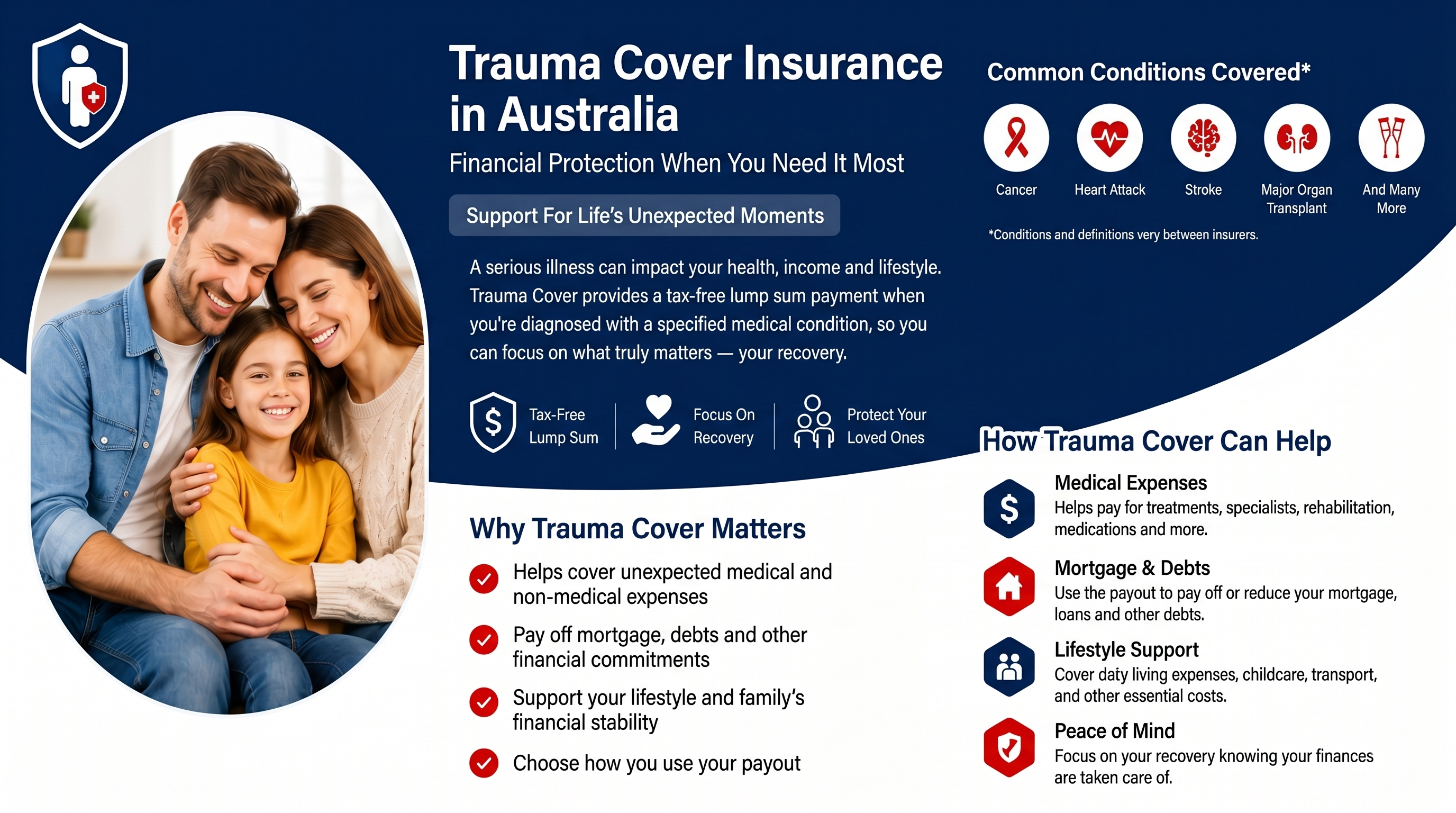
Trauma Cover is designed to provide a tax-free lump-sum payment if the insured person is diagnosed with a specific, serious medical condition listed in their policy.
Trauma Cover vs. Other Insurance Types
Unlike other forms of personal insurance, Trauma Cover is designed for survival:
- Life Insurance: Generally, it provides a benefit upon death or terminal illness.
- TPD Insurance (Total and Permanent Disability): Applies if a person becomes permanently unable to work.
- Trauma Insurance: Provides financial support at the time of diagnosis, regardless of your ability to return to work.
Importantly, a person does not necessarily need to be permanently disabled to make a claim. The benefit is triggered once the medical condition meets the insurer’s specific policy definition, allowing them to focus entirely on recovery.
Common Medical Conditions Covered by Trauma Insurance
While coverage varies between Australian insurance providers, most comprehensive policies cover a wide range of critical conditions, including:
- Cancer (of specified types and severity)
- Heart Attack and Coronary Artery Bypass Surgery
- Stroke
- Major Organ Transplant
- Neurological Conditions (e.g., Multiple Sclerosis or Parkinson’s Disease)
- Severe Burns
- Loss of Limbs or Vision
Each insurer has specific medical definitions outlined in its Product Disclosure Statement (PDS). It is vital to review these definitions, as waiting periods and eligibility requirements can differ significantly between brands.
Why Trauma Cover is Important for Australians
A common misconception is that Medicare or Private Health Insurance provides total protection. While these systems assist with hospital stays and some clinical costs, they rarely cover the "hidden" costs of a major health event.
A serious illness can jeopardize:
- Household Income: If you or your partner needs to stop working.
- Mortgage Repayments: The risk of losing the family home during a health crisis.
- Long-term Stability: Depleting retirement savings to pay for specialist care.
Trauma Insurance provides the liquidity needed to make choices—whether that is seeking the best medical specialists or taking a couple of months off work to recuperate without financial stress.
Potential Expenses Covered by a Trauma Claim
Many people underestimate the indirect costs associated with a major medical diagnosis in Australia.
1. Medical and Out-of-Pocket Treatment Costs
Even with a strong healthcare system, people may face:
- Private specialist consultations and "gap" fees.
- Rehabilitation services (Physiotherapy, Occupational Therapy).
- Non-PBS medications that are not subsidized by the government.
- Experimental or overseas treatments.
2. Mortgage and Debt Management
A lump-sum trauma payment can be used to:
- Pay off or significantly reduce a mortgage.
- Clear credit card debts or personal loans.
- Protect family assets from being sold under duress.
3. Lifestyle and Home Adjustments
Recovery may require practical changes such as:
- Domestic assistance and professional cleaning.
- Childcare support.
- Home modifications (e.g., ramps or bathroom adjustments).
Trauma Cover vs. Income Protection Insurance: Which Do You Need?
While they may seem similar, they serve distinct roles in a financial plan.
| Feature | Trauma Insurance | Income Protection |
|---|---|---|
| Payment Type | One-off Lump Sum | Monthly Benefit |
| Trigger | Diagnosis of a specified illness | Inability to work due to injury/illness |
| Purpose | Immediate, large capital needs | Ongoing daily living expenses |
Many Australians choose to hold both to ensure they have both immediate capital for medical bills and a steady income stream for long-term recovery.
How Much Trauma Insurance Do I Need?
There is no "one-size-fits-all" figure. To determine the right level of cover, you should consider:
- Your current mortgage balance and other debts.
- The number of dependants you support.
- Available emergency savings.
- Expected out-of-pocket medical costs for your family history.
As this is provided under general advice only, we are not taking your personal objectives, financial situation, or needs into consideration. Therefore, we are unable to advise you on the specific sum insured amount you may require.
Who Should Consider Critical Illness Cover?
Critical Illness (Trauma) Cover may be relevant for individuals who are seeking additional financial support in the event of a serious medical condition. This can include:
• Homeowners with ongoing financial commitments such as a mortgage or other debts.
• Self-employed individuals or business owners who may have limited access to paid sick leave benefits.
• Families who rely on one or more income earners to support household expenses.
• Individuals who wish to have greater financial flexibility when accessing medical treatment or recovery support.
The Importance of Professional Insurance Advice
Insurance policies can vary significantly in terms of features, benefits, premium structures, waiting periods, exclusions, and definitions. Understanding these differences is important when considering the type of cover that may suit your needs.
For example, premium structures such as Variable Age-Stepped premiums, Variable premiums, and Optimum/Hybrid premium options can impact the cost of cover differently over time depending on individual circumstances and long-term insurance goals. Policy terms, partial benefit provisions, and exclusions may also affect how coverage responds at claim time.
Insurance should never be a “set and forget” arrangement. Life events—such as marriage, having children, or buying a new home—should trigger a review of your Trauma Insurance to ensure your coverage still aligns with your financial goals.
Get a Professional Insurance Review Today
Understanding how Trauma Insurance integrates with Life, TPD, and Income Protection is the key to true peace of mind. At Rapid Smart Insurance Solutions, we provide the guidance you need to make informed decisions.
Contact us at Rapid Smart Insurance Solutions for a General Advice Consultation
General Advice Warning
The information provided in this article is general in nature only and does not take into account your personal objectives, financial situation, or needs. Before making any decision regarding a financial product, you should consider the appropriateness of the information having regard to your own circumstances and read the relevant Product Disclosure Statement (PDS) and Target Market Determination (TMD).
Rapid Smart Insurance Solutions is a trading name of Hooda Financial Consultant Pty Ltd, Authorised Representative No. 462603 of Wealth Today Pty Ltd AFSL 340289. Comparisons are limited to products available through our approved panel of insurers.